
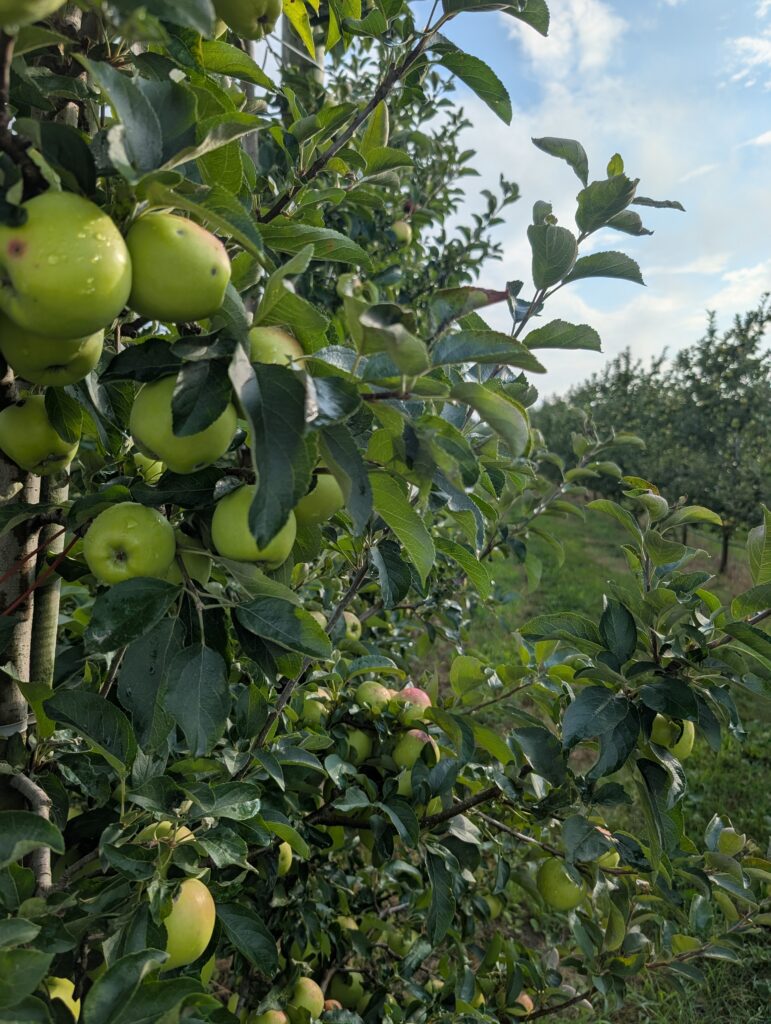
On August 19th, members of the Horticultural Society had the opportunity to tour Manitree Orchards in Cedar Springs. This 5th generation orchard grows strawberries, tart and sweet cherries, peaches, nectarines, cantaloupes, squash, apples, pears, tomatoes and apricots on 350 acres. It’s location on a ridge along Lake Erie means it is a micro-climate with a variety of soil conditions. Crops like peaches are grown on the lighter soils higher on the ridge, and pears and apples are on the heavier soils below. Manitree grows a diverse array of crops to allow for work to be spread throughout the year and provide good crop rotation.
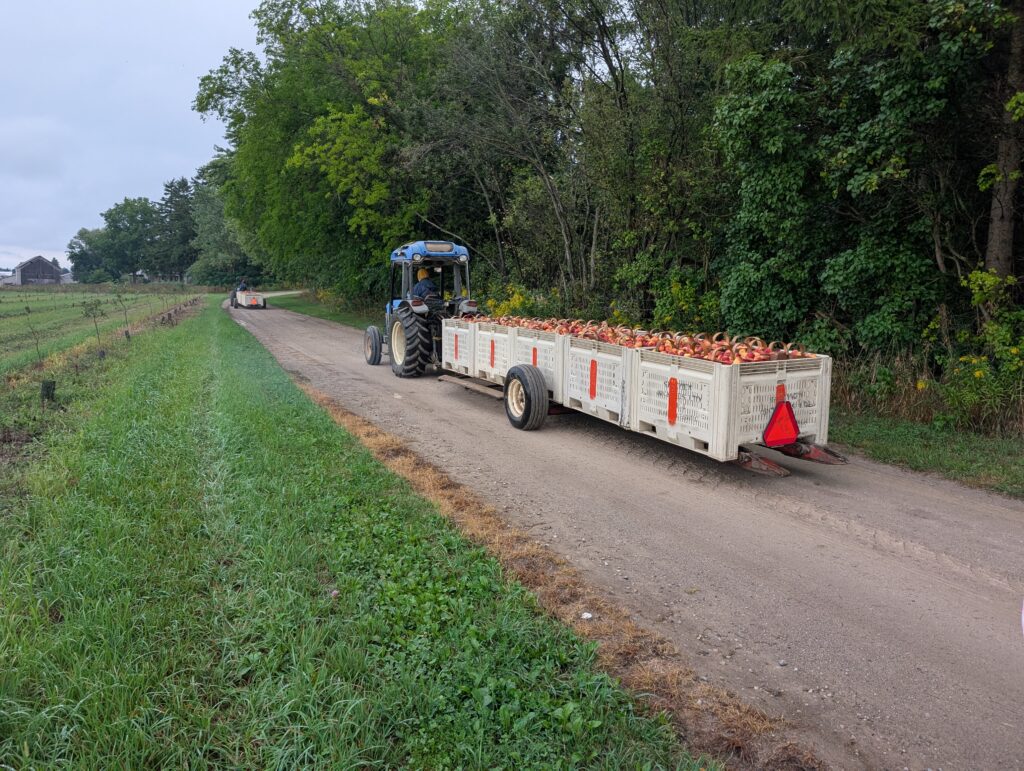
At the time we were visiting, they were picking peaches and tomatoes, thinning apples, packing peaches to ship to grocery stores throughout Windsor, Essex and Chatham-Kent. Along with these activities, Brian is monitoring the crops that are ripening to access when they will be mature and keep an eye on pest pressure. Manitree employs an integrated pest management approach – using pesticides only when necessary, being diligent about rotating active ingredients and making choices to improve plant health and resilience so disease and pest pressure has less effect on fruit quality.
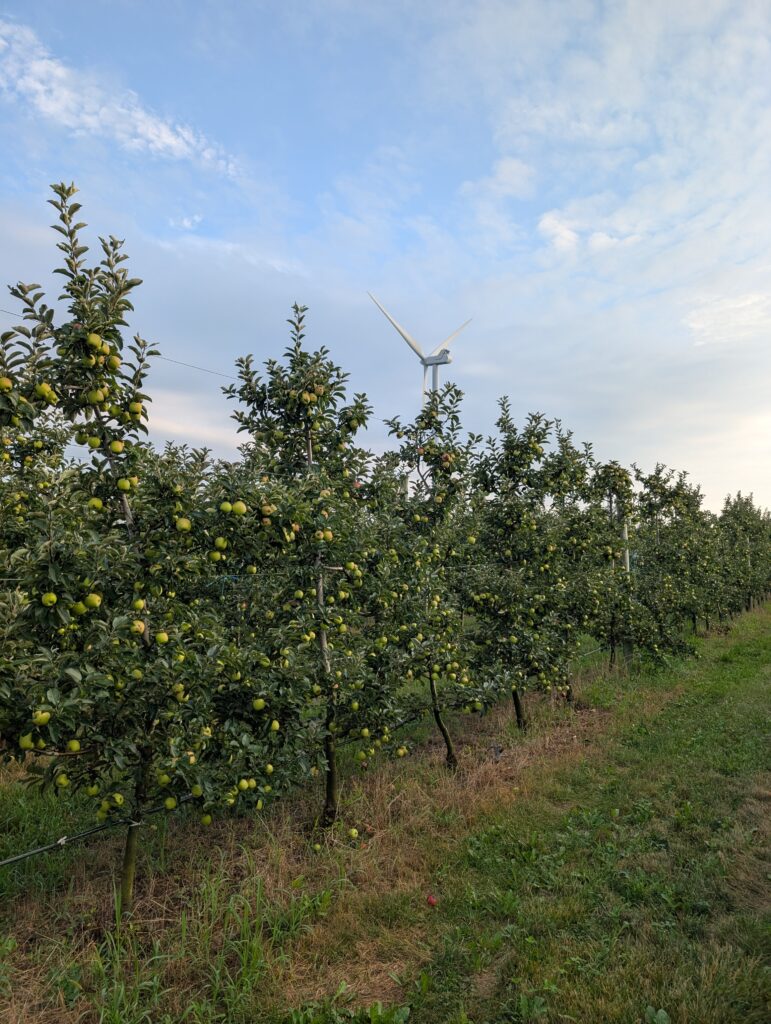
When choosing varieties in the orchard, it is important that the root stock, variety and soil work well together. Disease resistance in our climate is also important. For example, Ambrosias are delicious apples that grew as a sport in a Gala orchard in BC about 40 years ago. In BC, they don’t have to deal with apple scab, which Ambrosia is susceptible to in our area. Other varieties are developed in our area and do really well. For example, Happi is a pear that was bred at the Harrow research station, so it is suited to our high humidity climate. The fruit needs to be marketable long term and ideally, it produces annually. Honey Crips is a very popular apple, but it is biannual. On the other hand, Manitree grows a high quality Red Delicious, but they are significantly less marketable. Luckily, Red Delicious serves an important role in the orchard for cross pollination, so they still have a place.
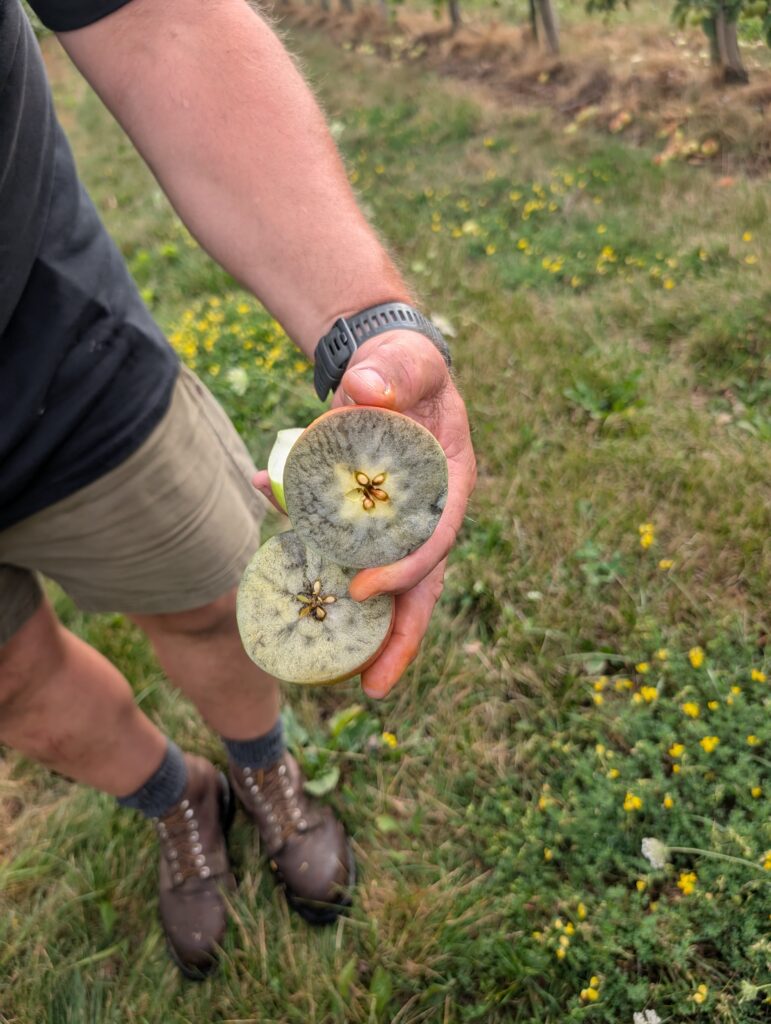
When monitoring the orchard, Brian often cuts the fruit in half. When a pear or apple is ready, the sugars in the fruit will stick them back together and hold them, even when you’re only holding half the fruit. Before they get to that point, Brian will spray the halves of the fruit with a 2% iodine solution. The starches oxidize and turn black, but sugars stay white. Apples are ready to be picked when they are around ¾ converted to sugars. The process will continue slowly in the correct storage.
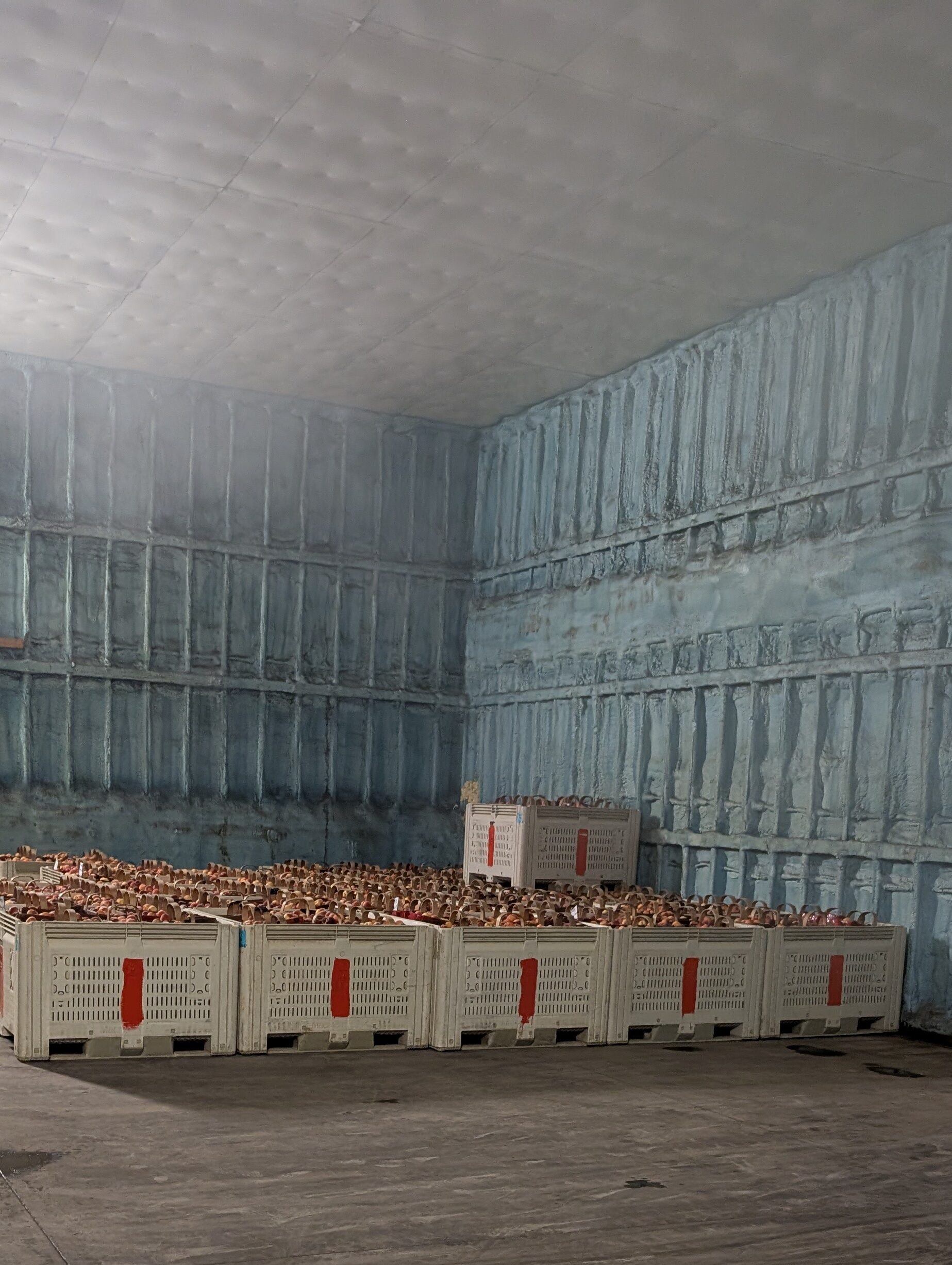
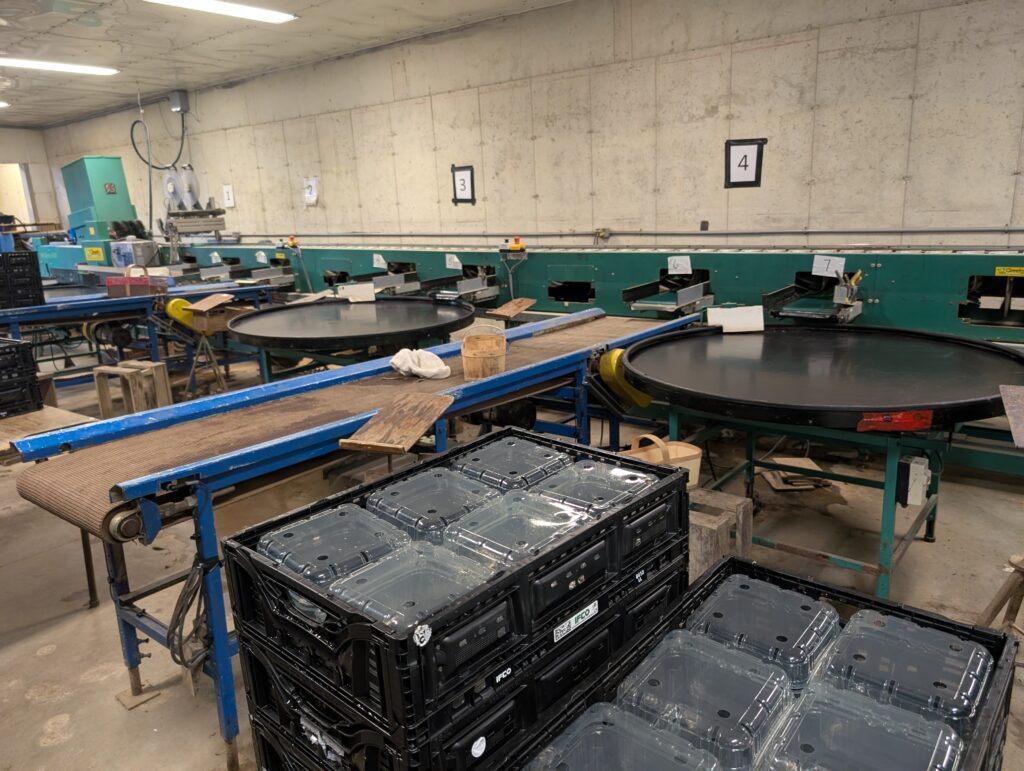
Manitree’s long term storage rooms are both refrigerated and able to be sealed and have the oxygen reduced in them. When we saw them, only the refrigeration component was being used as peaches move in and out over a short period of time. When they are used for apples, they will be packed strategically to align with shipping plans, sealed, and have the oxygen reduced to 2%. In the same building as the storage is the packing line. A size sorter splits the fruit into different groups for packing. While we were visiting, they were packing peaches, which they find keep best for customers in clam shells. Brian commented that he finds cardboard baskets suck the moisture out of the fruit.
The members really enjoyed the tour and encourage you to visit Manitree yourself. It is located at 8445 Talbot Trail, Blenheim, which is just west of Cedar Springs. During the season, they are open 9 am to 5 pm.